Bold.org — Rethinking Application Review for Donors
At Bold.org, donors are the core of the platform, driving engagement and meaningful outcomes for students. This impact is enabled by a highly personalized, high-touch donor service model — effective by design, but difficult to scale sustainably.
Date
Fall 2025
My Role
End-to-end product design ownership
TL;DR
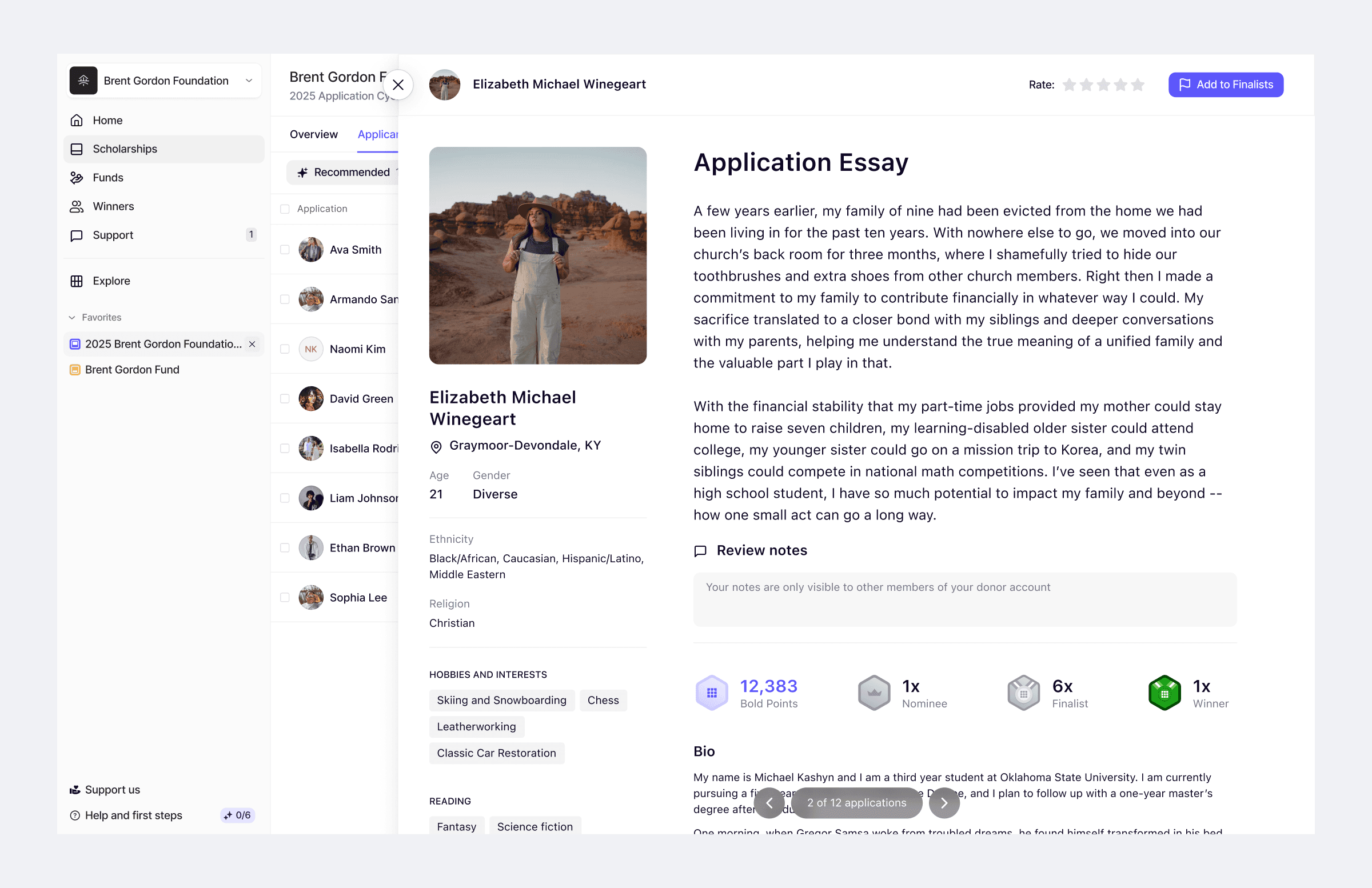
Bold.org supports both individual donors and large organizations (brands, companies, and foundations) with team accounts. As application volume per scholarship grew to hundreds and thousands, reviewing became slow and inconsistent—especially for team donor accounts with multiple reviewers.
We redesigned application management to help donors make confident decisions at scale:
AI-assisted triage (Recommended tab) to increase focus
A single-page review workspace to eliminate context switching
Optional ratings + notes to keep multi-reviewer accounts consistent
Context
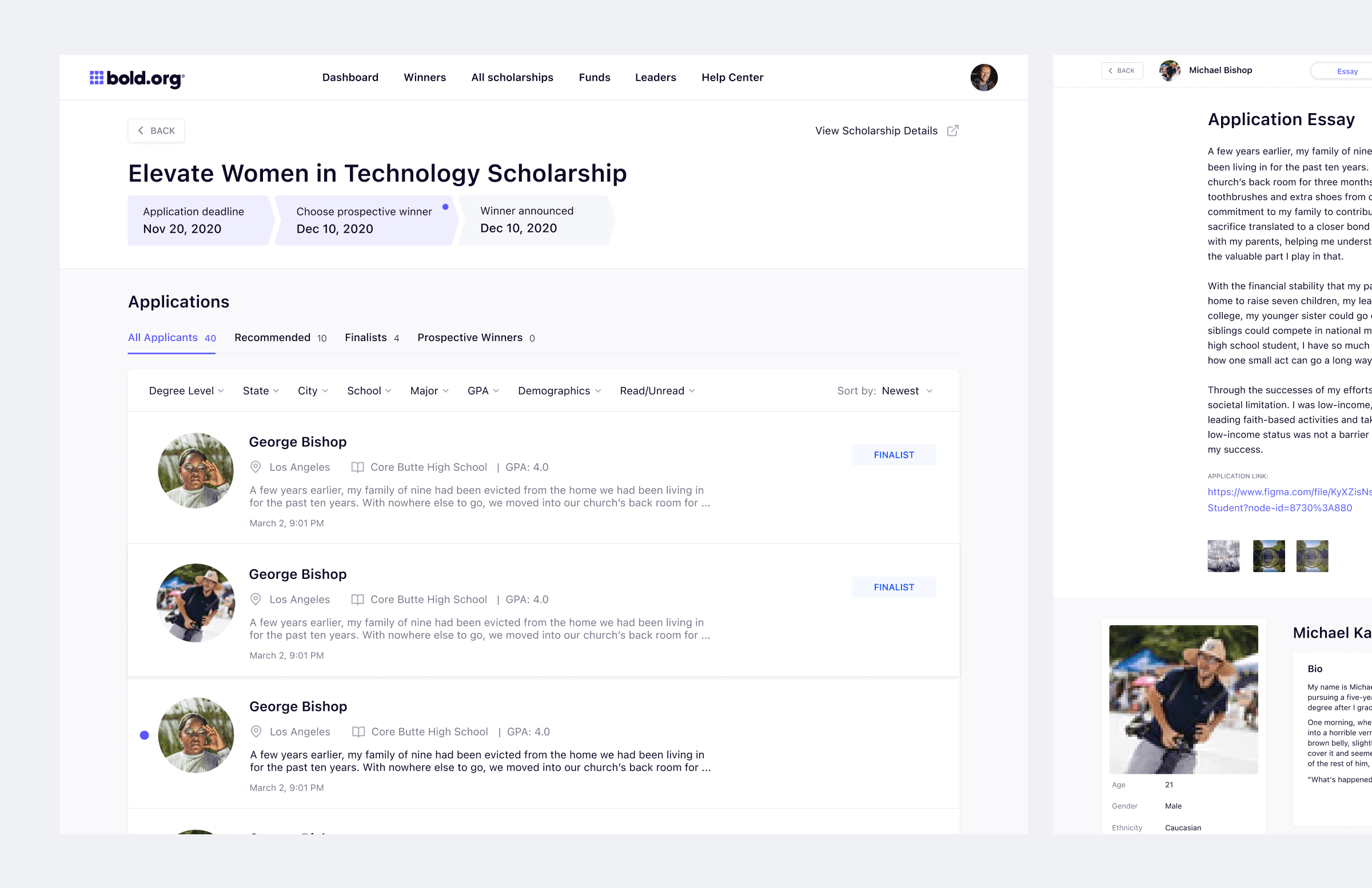
Bold.org is a scholarship platform where donors fund scholarships for students. What started as a simple “launch a scholarship” flow evolved into ongoing scholarship programs — and that’s where review became the operational bottleneck.
When each scholarship receives hundreds to thousands of applications, the traditional list-based review collapses. We saw four recurring breakdowns:
Signal Problem: It was hard to quickly find strong candidates.
Context Switching: Donors had to jump between pages to understand an applicant.
Team Inconsistency: Multi-reviewer accounts produced uneven decisions (different criteria, duplicate work).
Support Dependency: Donors relied on the Donor Team for status questions, next steps, and edge cases.
As we scaled, the donor experience had to shift from “a dashboard” to workflow software. Large donors wanted a system that helps them make decisions quickly, confidently, and repeatedly.
My Role
I owned the end-to-end design, which included user research, mapping donor review workflows, synthesizing insights from user and operational data, designing the information architecture and interaction patterns, and partnering with Donor Team and engineering on execution.
Solution
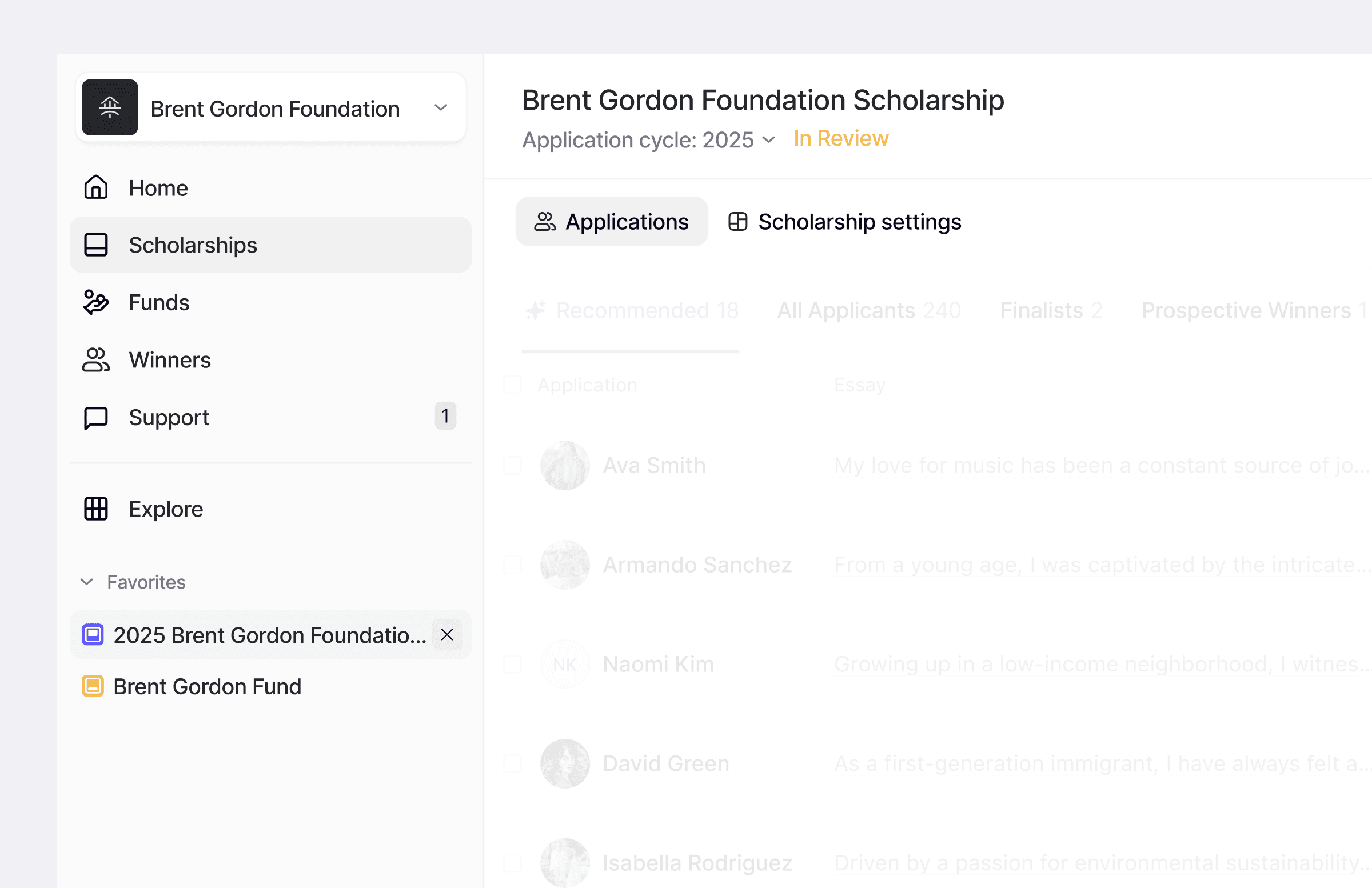
Improved Navigation
We redesigned the Donor Platform layout and navigation around the core donor flows, creating a cleaner, more focused workspace. By reducing visual clutter and keeping the interface centered on what donors actually need to accomplish, the product feels simpler today and leaves clear space to add future features.
AI-Assisted Recommendation Engine
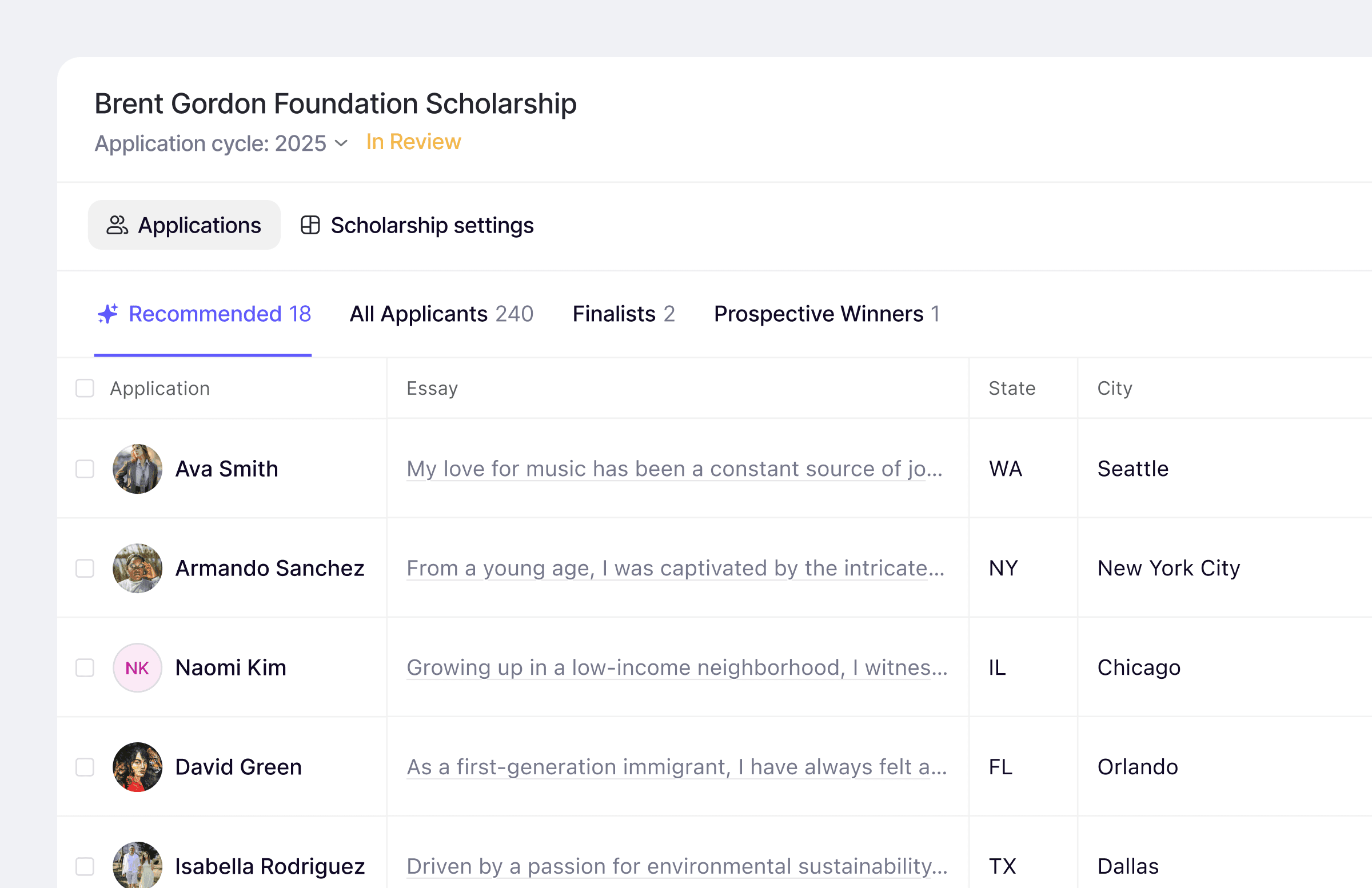
When you have thousands of applications to review, just "sorting" them is a huge task. The Recommended tab is designed to quickly get donors to the most promising candidates. We train our AI engine, so it makes this happen by analyzing the application itself, along with every relevant piece of data from the scholarship page and both donor and student profiles.
It’s reducing cognitive load and time spent on discovery. Instead of sifting through a large pool, the UX immediately presents a curated, high-quality shortlist, accelerating the decision-making process. The "clear reasons" enhance transparency and trust in the system's recommendations.
For most donors and managers, selecting finalists and winners is important and often emotional, so the AI is tuned to keep the recommended applications broad enough to offer genuine choice while ensuring the list is not overwhelming.
We also put donors in full power to override the AI’s suggestion. Any time a donor add high rating or positive note, we adjust the recommendation list and engine settings for this specific donor.
Single-Page Review Flow
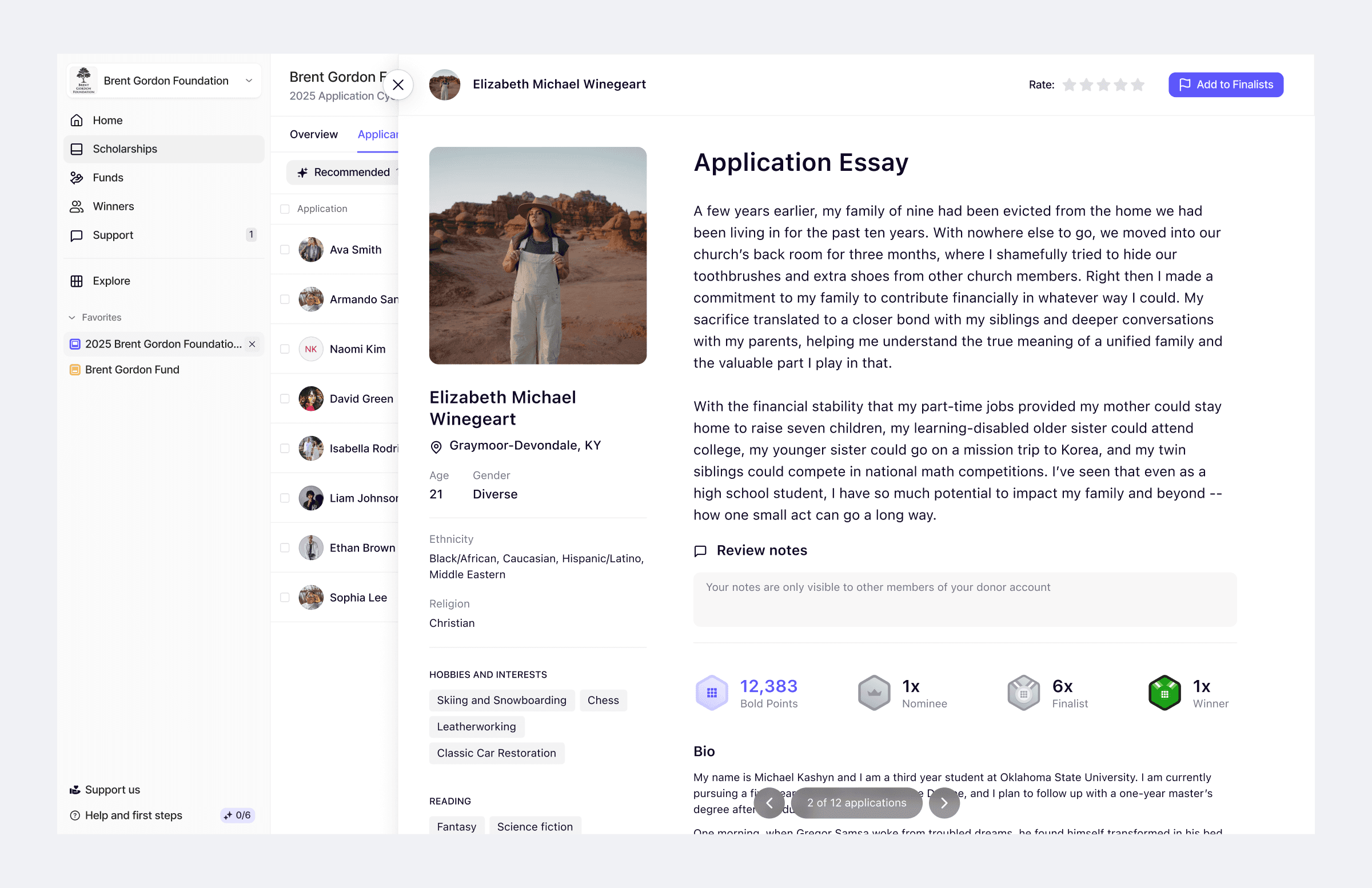
To simplify the applications list view, I made a deliberate tradeoff: keep the list lightweight and scannable, and move deep context and all actions into a slide-in details view.
The list became a fast triage surface: more applicants visible per screen, consistent columns, and a clear starting point.
Clicking any applicant opens the full application + detailed student profile in one view.
The user always see the applications list, which helps to stain in context
Donors can move through review with a Previous / Next navigator at the bottom—so they don’t have to bounce back to the list after each read.
Improved Collaboration
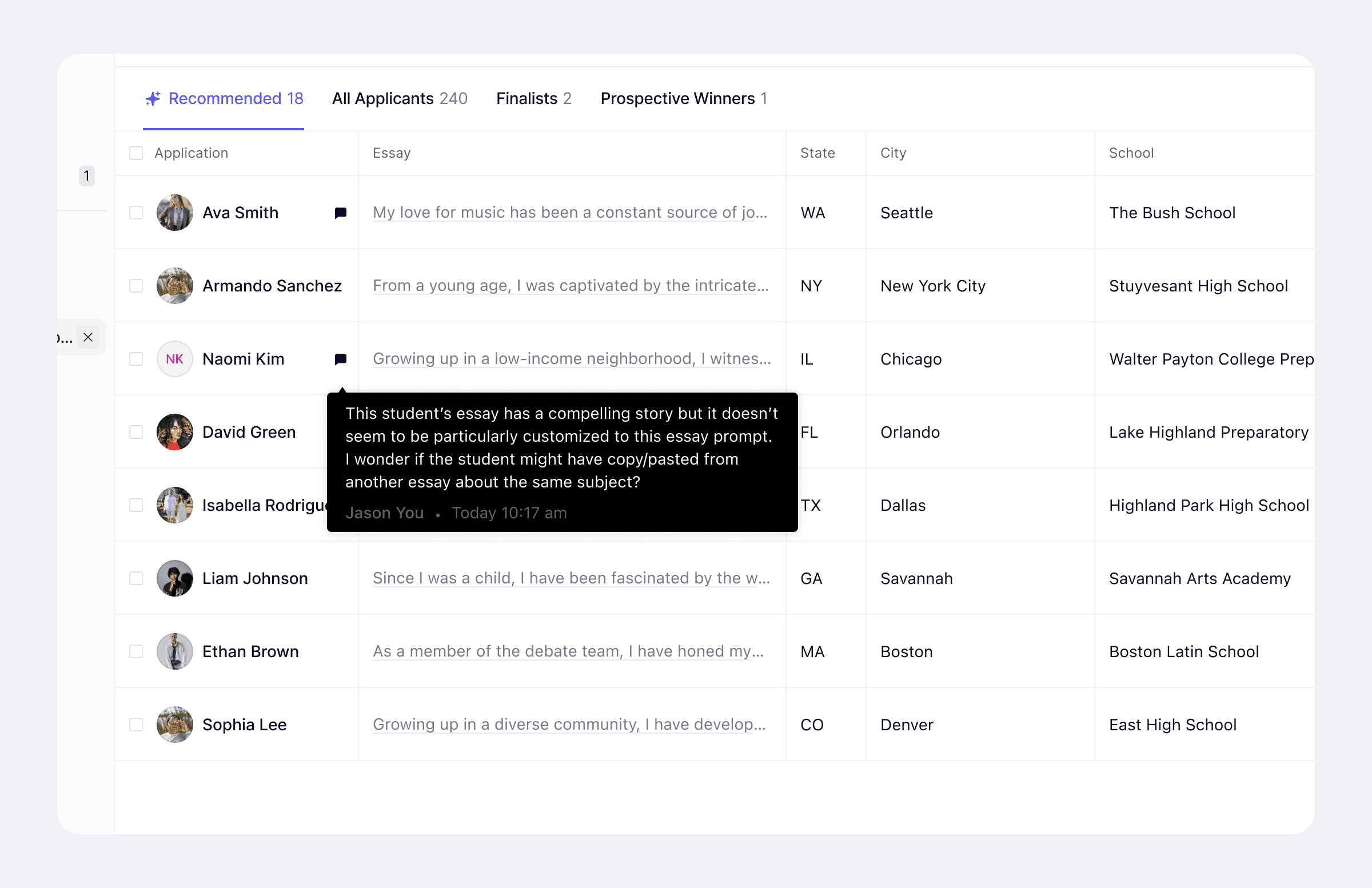
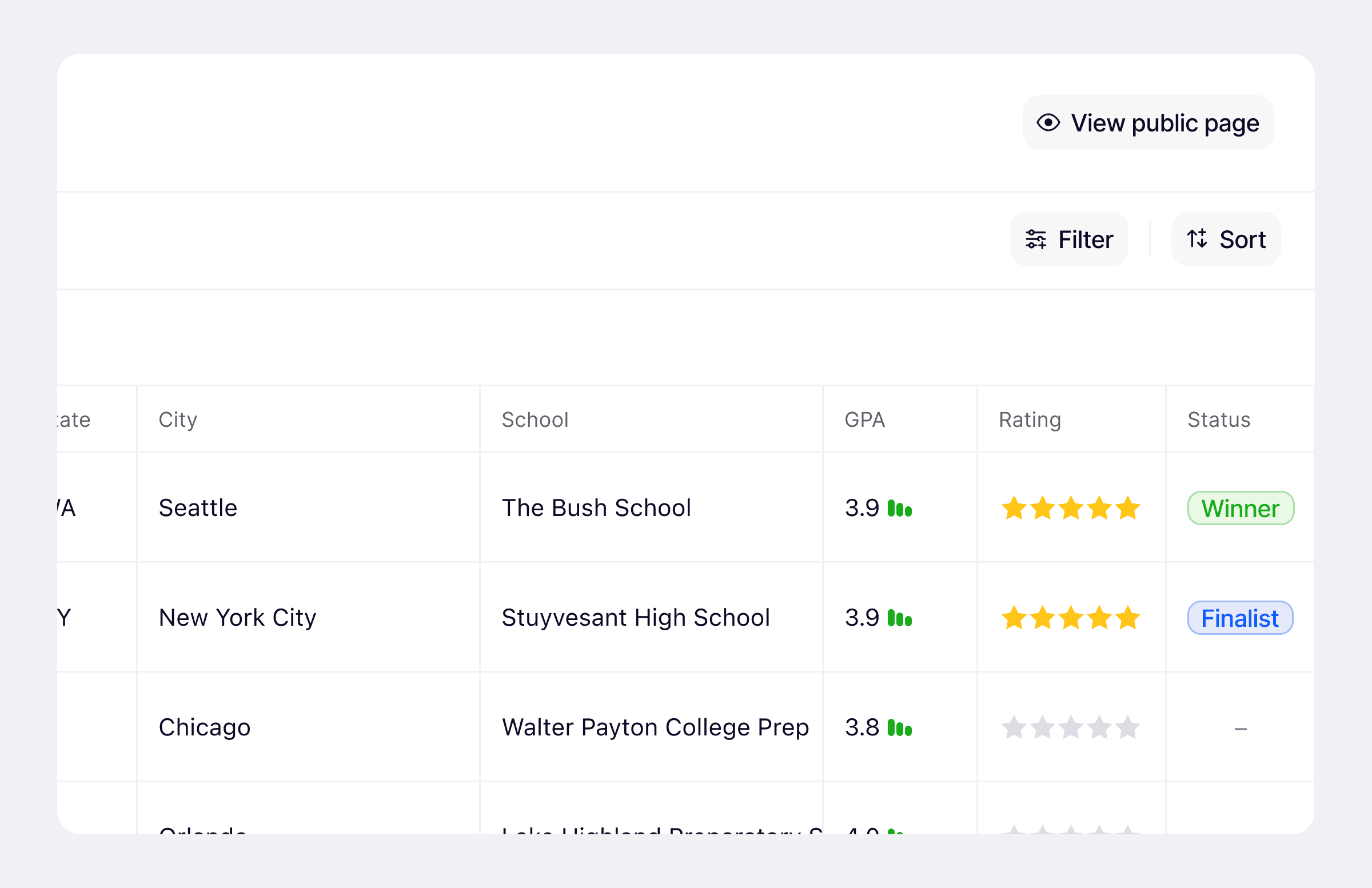
To address team inconsistency, we added lightweight collaboration tools that are optional:
Ratings for teams that want structure.
Quick Notes for handoffs and decision rationale.
Outcomes & Impact
The final solution exceeded expectations across both trust and business outcomes:
Optional tipping now generates 20–25% of Bold.org’s total revenue
The donor product is able to fund its own operational costs, reducing dependency on other revenue sources
Donors who tip are significantly more likely to create additional scholarships
Donor engagement deepened, with no increase in complaints or mistrust signals
Most importantly, Bold.org remained a safe and joyful place for donors to make a real, meaningful impact at scale.