Bold.org — Thank‑You Notes From Scholarship Winners
After a scholarship is awarded, the relationship between the student and the donor/sponsor often goes silent. Winners feel grateful but rarely write a note; donors want human proof of impact. We designed a thank‑you note experience that made gratitude effortless, privacy‑safe, and meaningful for both sides.
Date
Summer 2025
My Role
End-to-end product design ownership
TL;DR
Problem: Winners rarely send thank‑you notes; donors lack human proof of impact.
Solution: We generated a ready‑to‑submit, draft using donor mission, scholarship description, winning essay and student profile.
Result: Sending became the default behavior (review → send), while keeping authenticity, transparency, and safety guardrails.
Context & Problem
Bold.org is a scholarship marketplace funded by individuals, brands, and foundations. Scholarships are mission‑driven: donors want to support specific communities and outcomes.
A thank‑you note is a high‑leverage two‑sided marketplace loop — but it was breaking:
Most scholarship winners did not send a thank‑you note unless unusually motivated.
When donors received no human follow‑up, impact felt abstract and confidence eroded.
Bold missed a trust moment that reinforces the relationship between mission and outcome.
Root cause: Students cared, but “write a meaningful note” is a high‑effort task: blank page anxiety, tone/grammar concerns, and time pressure).
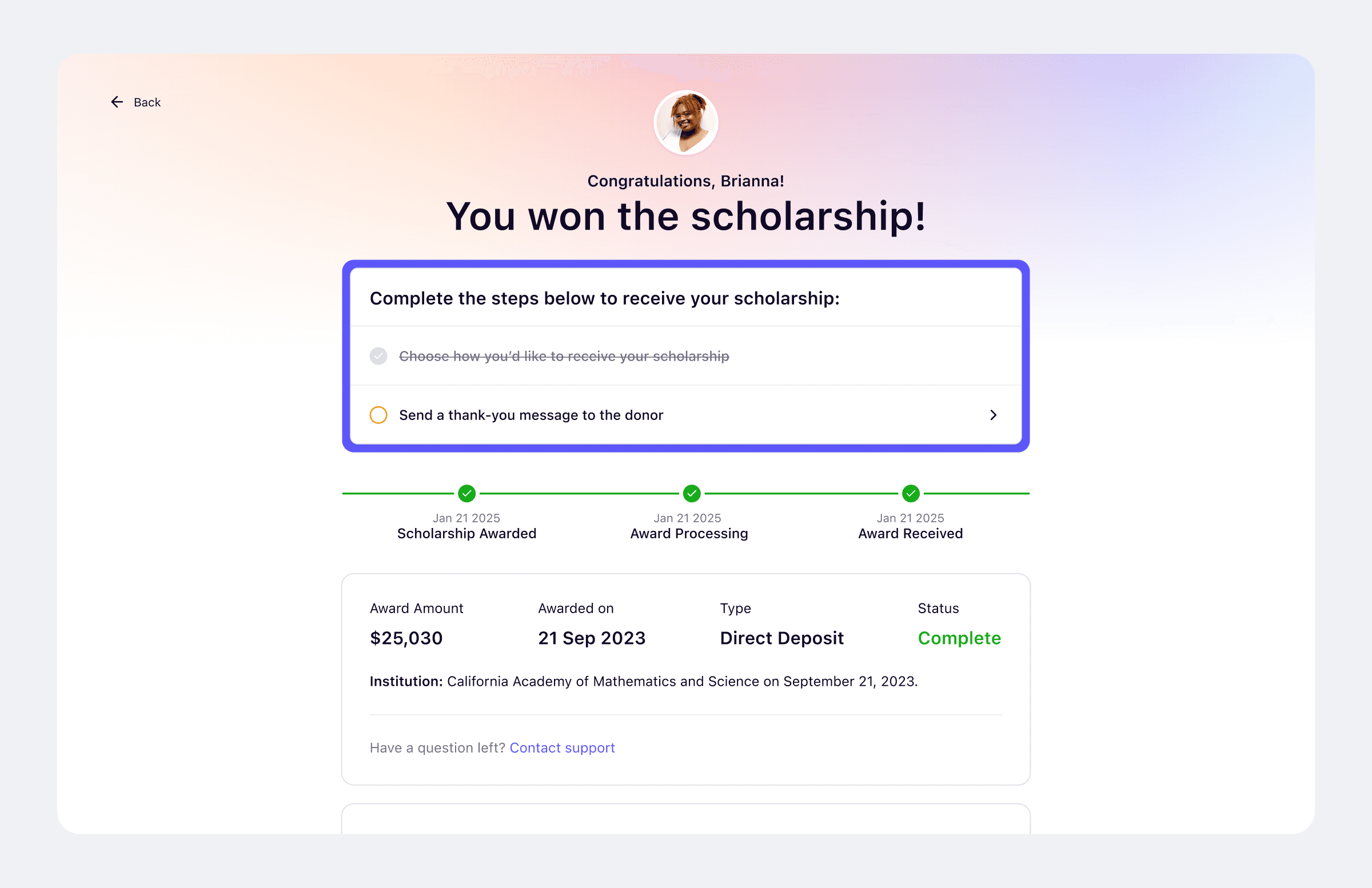
Solution
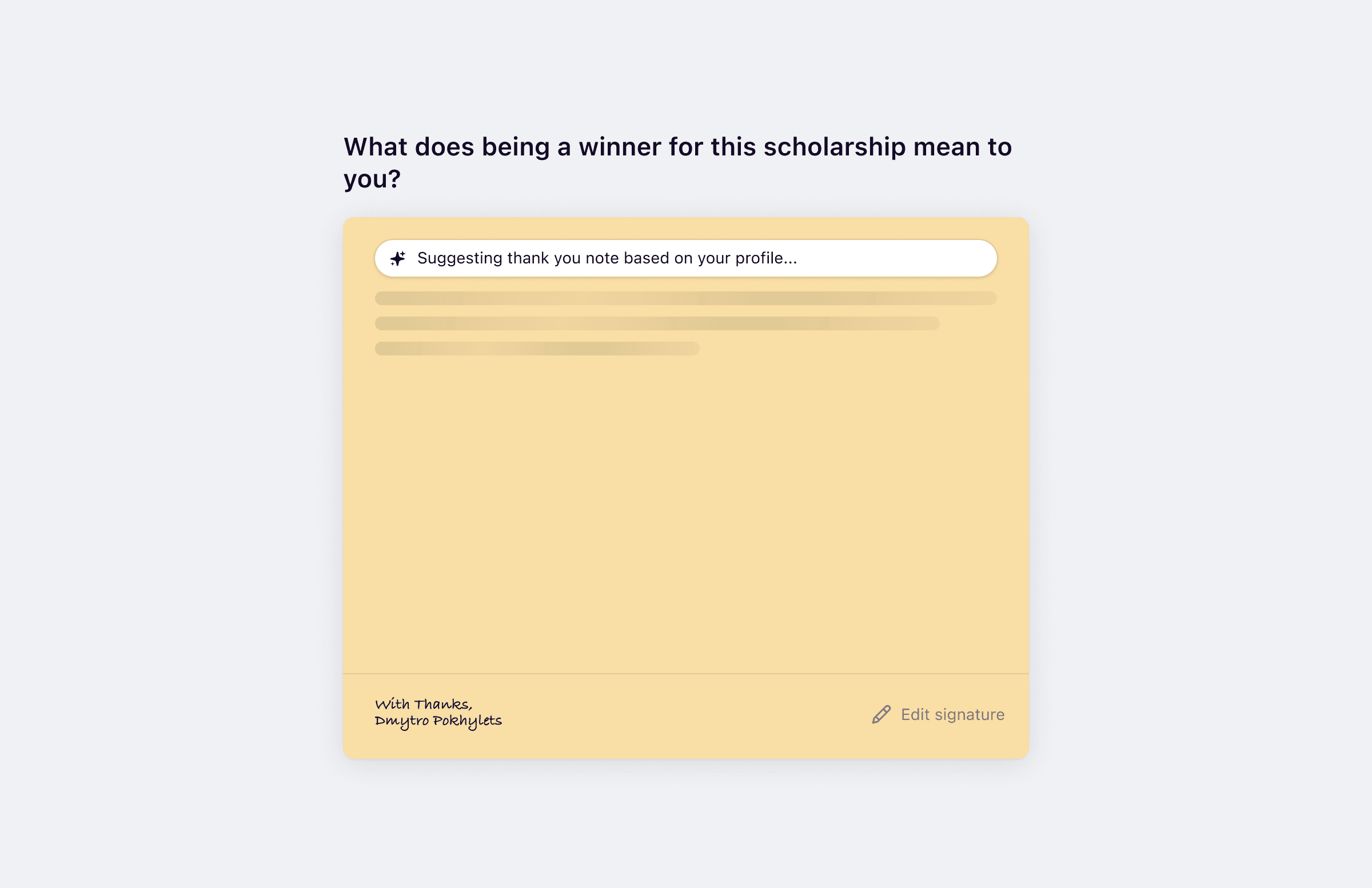
By the time a scholarship is awarded, we already have the ingredients for a meaningful thank-you. The donor profile and mission show what the sponsor values, the scholarship description explains the purpose, and the winning essay plus student profile capture the student’s voice, goals, and constraints.
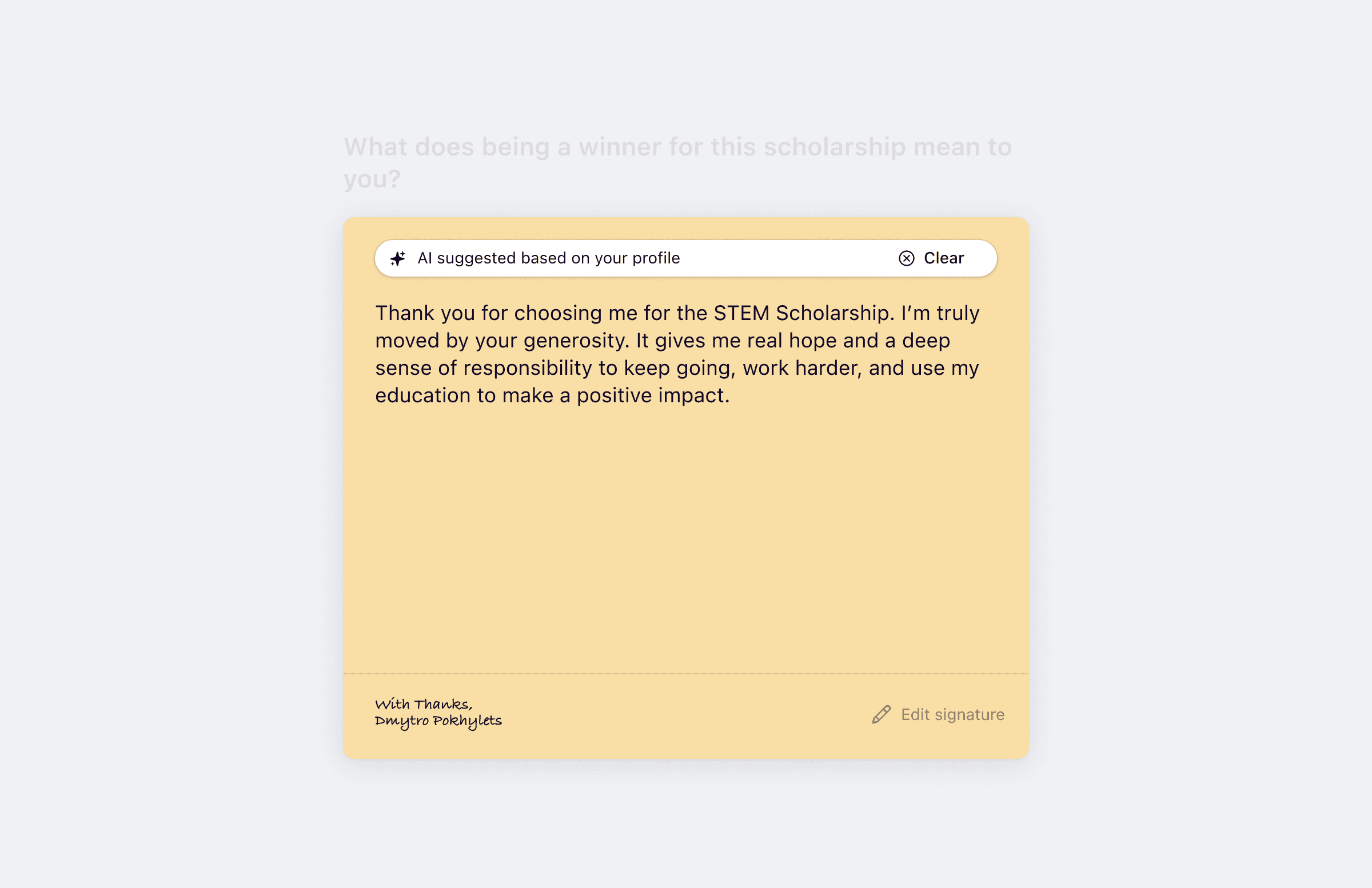
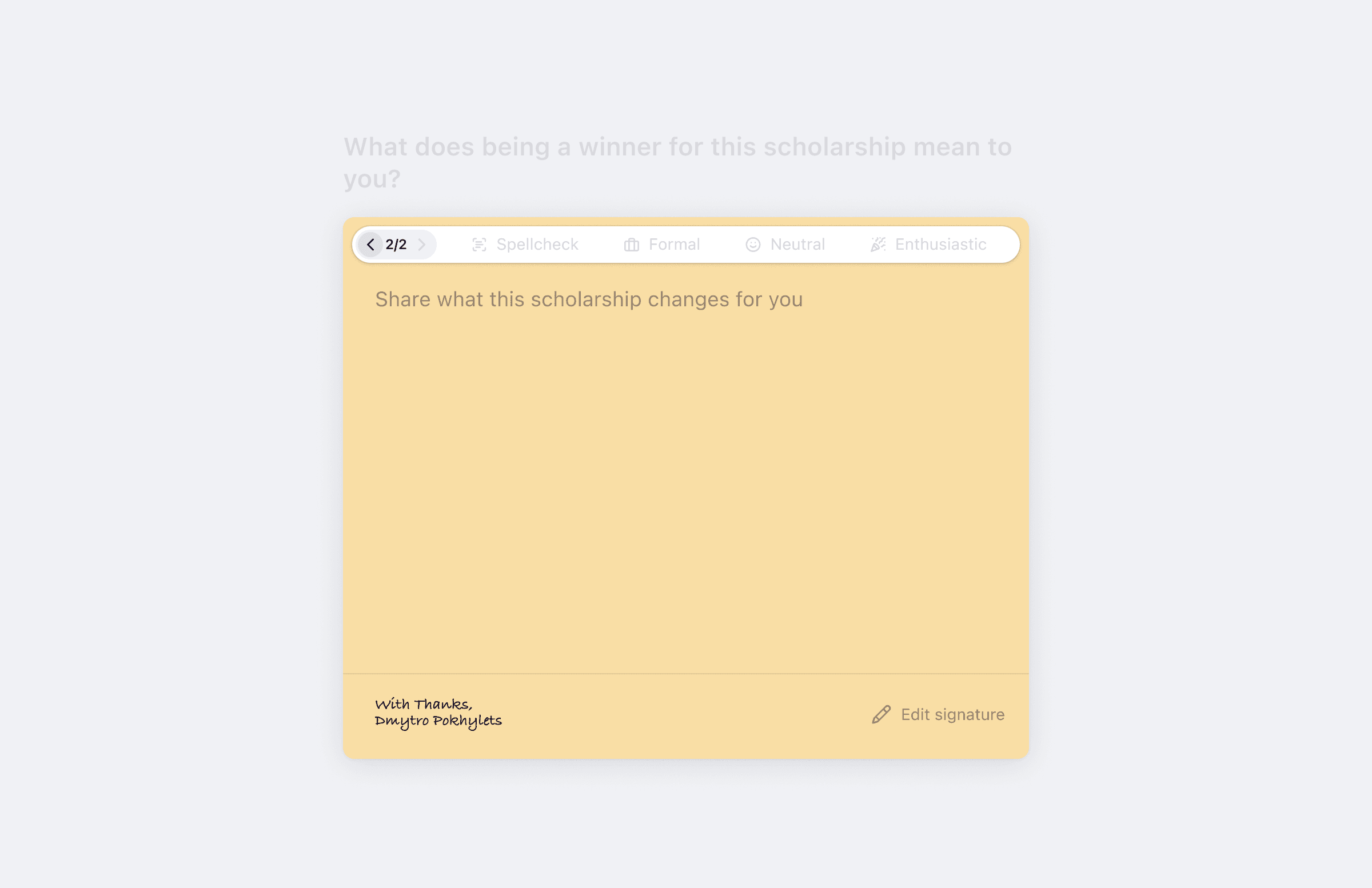
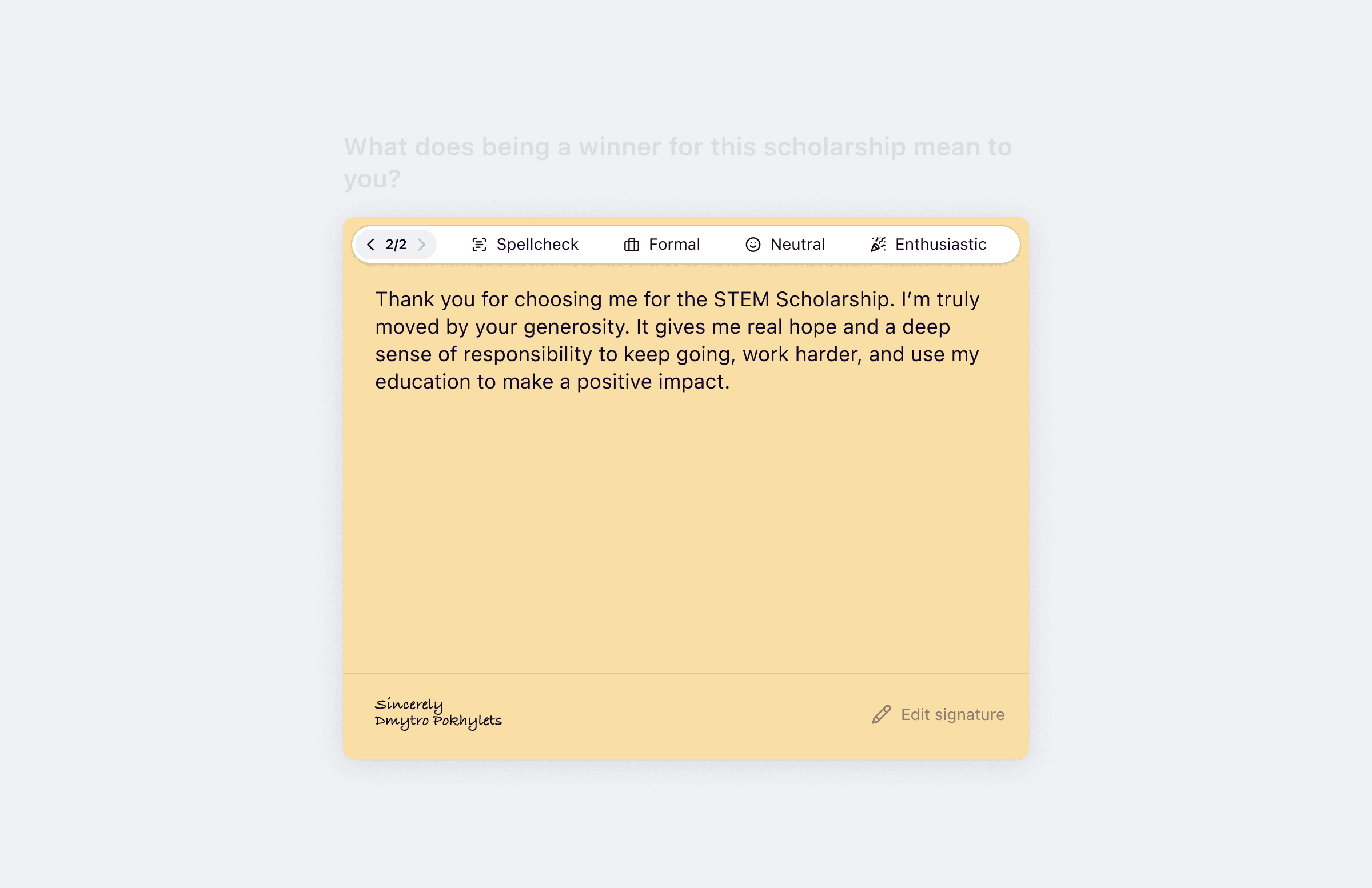
We use that context to generate a specific, polished draft—so students can personalize it instead of facing a blank page.
When a winner reaches the thank-you step, a complete note is already there—no prompt, no template picker, no “how do I start.” At the top, we clearly disclose the source with the banner “AI suggested based on your profile,” and provide a one-click “Clear” option to remove the suggestion.
The behavior we designed for is intentionally simple: review → send.
Delivery to Donors
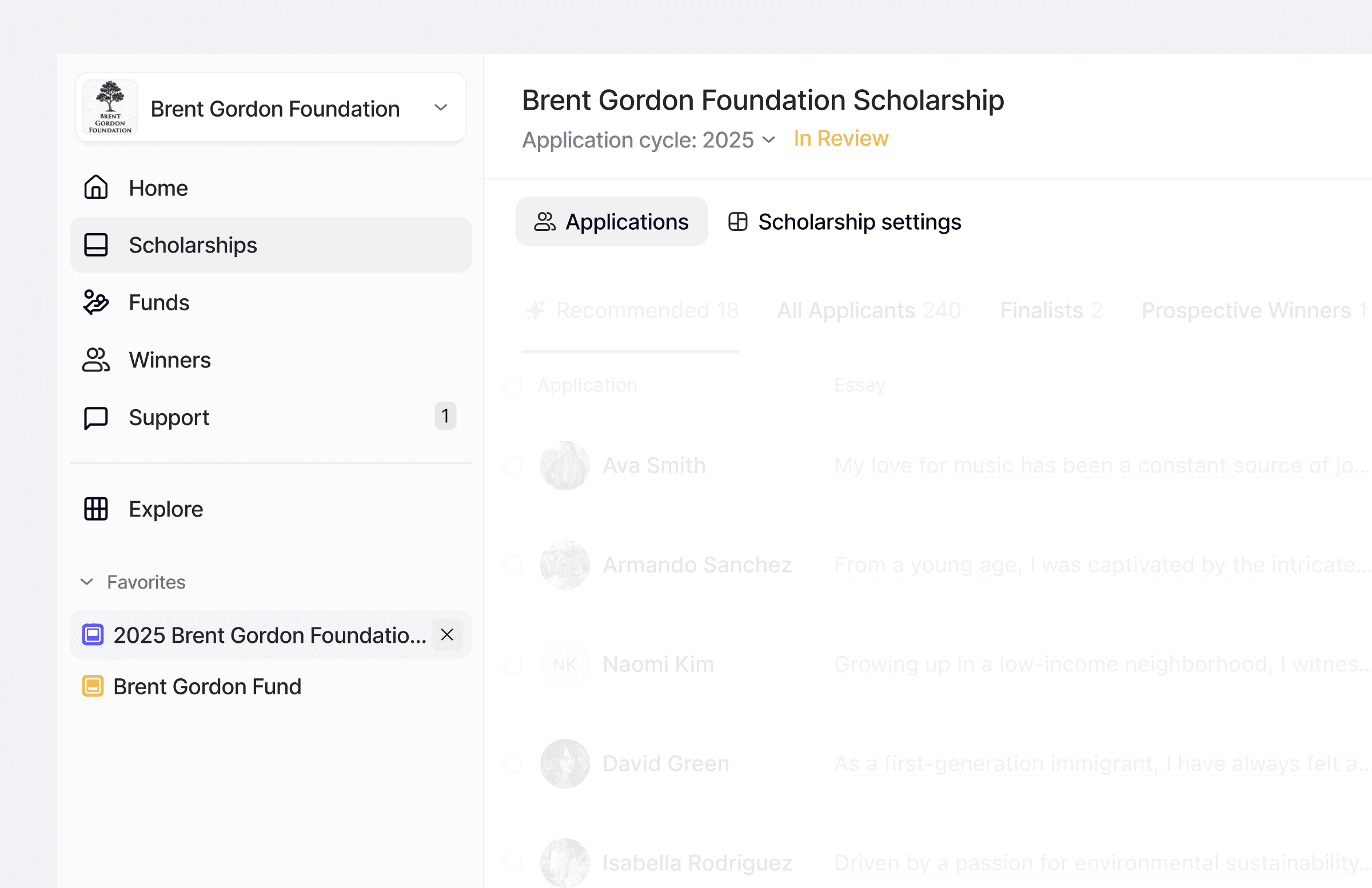
At launch, thank-you notes lived inside each scholarship, and most donors found them through email because that is where they already pay attention.
Eventually, we created a dedicated section for donor and student communication with easier access to thank you notes. That space is the start of a stronger bridge over time, with a clearer and safer path toward ongoing support and, eventually, mentoring, while still protecting student privacy with the right guardrails.
Delivery to Donors
At launch, thank-you notes lived inside each scholarship, and most donors found them through email because that is where they already pay attention.
Eventually, we created a dedicated section for donor and student communication with easier access to thank you notes. That space is the start of a stronger bridge over time, with a clearer and safer path toward ongoing support and, eventually, mentoring, while still protecting student privacy with the right guardrails.
Outcomes & Impact
By removing the “blank page” moment, we made sending the default behavior: winners stopped postponing and started reviewing and hitting send. The impact showed up immediately in our core metric—the thank-you note send rate climbed from 28% to 99.1%.
And it wasn’t just numbers: students told us the experience felt far less intimidating, especially non-native writers, while donors finally started receiving consistent, authentic proof of impact that deepened their connection to the platform.